Our Office: 4100 32nd Ave. S. Fargo, ND 58104

Cooperative Tested
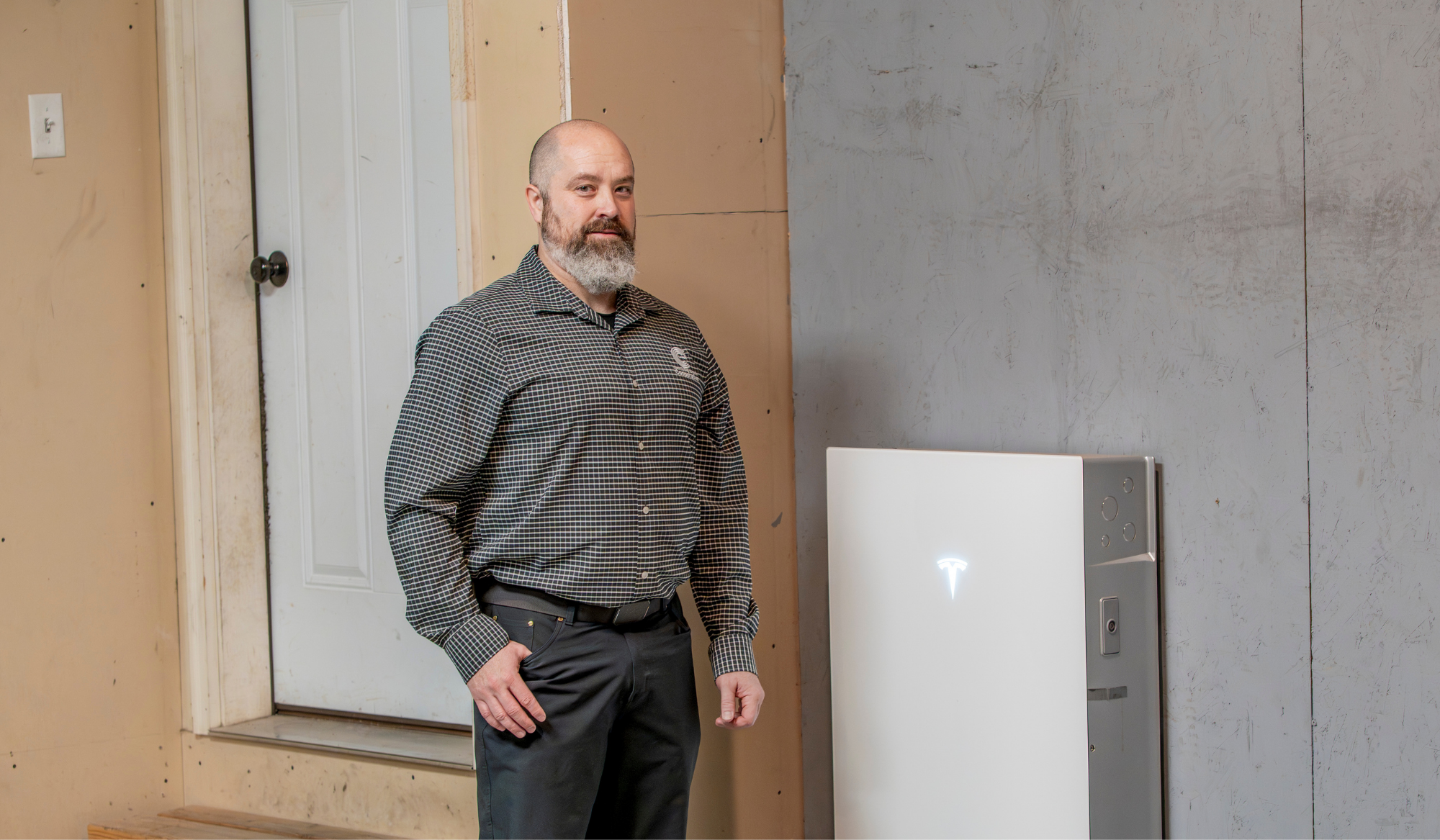
Cooperative (CCEC) wants to learn about new technology, they don’t rely solely on web research or hearsay. They put the tech to the test. So, when it came time to take a Tesla Powerwall battery storage system for a spin, they recruited someone on staff to give it a shot in his home.
“Our members were starting to get interested in battery storage, so I’m kind of the guinea pig,” said Nick Ludowese, CCEC manager of GIS & Data Analytics. “Because I live on our system and do data analysis for the company, they decided that it would be good to put it here.”
“Nick’s a data guy, but he’s also a tech guy,” said Troy Knutson, CCEC vice president of Engineering & Operations. “He was one of the people who helped design our time-of-day rate, so he understood what we were trying to do.”
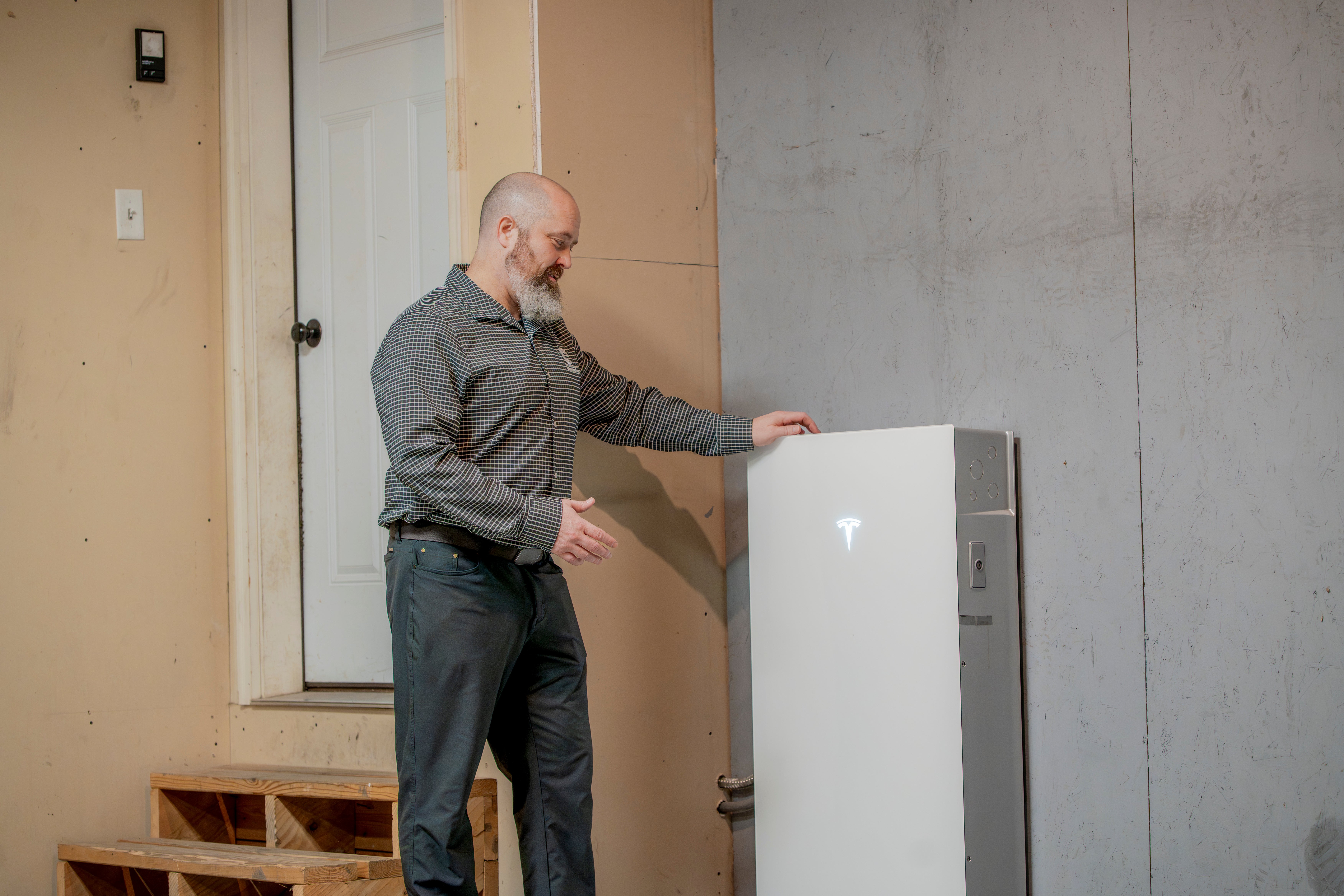
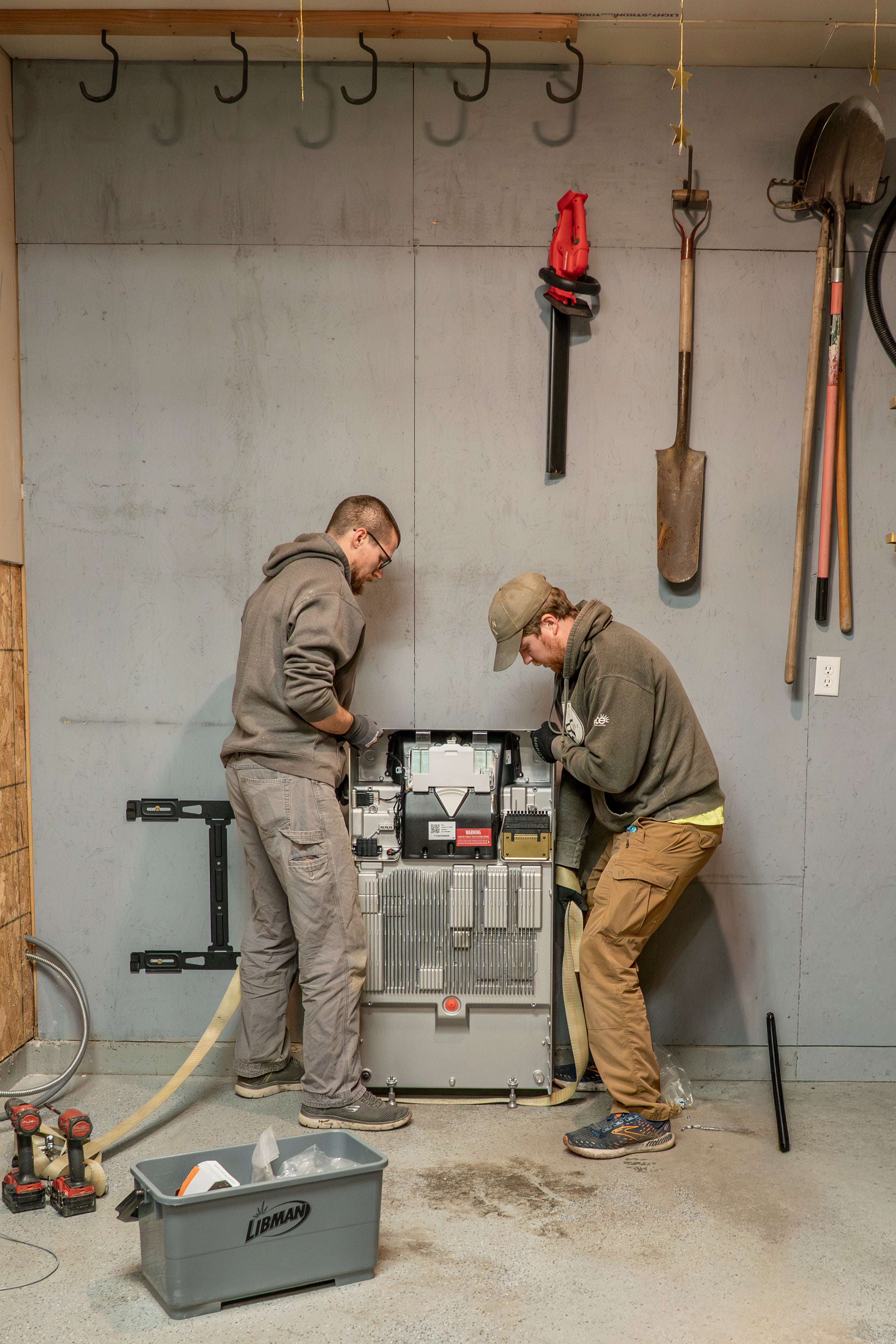
Nearly a year ago, the CCEC team had a Tesla battery storage system installed in the garage of Ludowese’s West Fargo home, including a disconnect switch for safety and a power quality recorder to collect key energy data.
The biggest questions the co-op hoped to answer with the help of Ludowese’s Powerwall were straightforward: How does battery storage work in a home? What are the pros? What are the cons? And how can it be paired with the CCEC time-of-day rate for savings?
Nearly a year into testing, they’ve found answers to most of their questions.
How does it work?
The 13.5-kilowatt-hour (kWh) Powerwall pulls energy from the CCEC grid and stores it until it needs to be used. To take advantage of the co-op’s time-of-day rate, Ludowese charges the battery during non-peak times, when the demand for electricity is lower and he receives a lower time-of-day electric rate of $0.052 per kWh. Then, when demand rises and electricity climbs to an on-peak price of $0.222 per kWh (usually weekdays from 6-9 a.m. and 4-8 p.m.), he can simply use that less expensive stored energy to power his home.
“It basically puts my house on non-peak permanently,” he explained, adding that the 13.5-kWh battery is plenty to get the family through peak hours. “There are maybe a couple hours in the summertime when I’ll run out of battery because of our air conditioning, but then it just seamlessly switches back to grid. And we don’t notice a thing.”
Ludowese notes that his home doesn’t have electric heat, which could require more battery power in the cold winters. The system is stackable, so larger operations can scale the amount of daily power needed. But for the size of his house and his family, one Powerwall is all he requires. “Getting the system that fits your house and lifestyle is important,” he said.
What are the benefits?
A key benefit of the battery storage system on the time-of-day rate is that Ludowese saved nearly $500 compared to what he would have paid on the standard rate over a year. Nearly 50 CCEC members now take advantage of the time-of-day rate for saving on electric vehicle charging, but battery storage may be the next best use case.
“Overall, Cass County Electric also saved $572 on demand charges with this battery being there,” said Chad Brousseau, vice president of Member & Energy Services. “It’s a win-win for the member and the utility.”
As for performance, the Powerwall worked flawlessly as a backup uninterruptible power supply (UPS) – even though outages on the CCEC system are rare. To test an outage scenario, co-op lineworkers physically disconnected the home from the grid, and the battery system took over without even a blink. Ludowese says during a real outage, the Powerwall could power his home for more than a day, without the need to start up an outdoor generator. It’s a great solution for those who work from home, have active sump pumps or power medical equipment.
“We put the system through the ringer with emergency tests,” Brousseau said. “We performed all kinds of different scenarios – dropping one phase, dropping full power, going just on battery alone versus having the battery with the grid there to back it up.”
“It performed well during all of that,” Ludowese said.
Image
Image
Image