Our Office: 4100 32nd Ave. S. Fargo, ND 58104

Local membership. Real returns.

Please visit here to learn more and view our list of unclaimed capital credits!
Cass County Electric Cooperative will return $2.75 million in capital credits to members who paid for electricity in 2005, as well as estate and early retirement payments.
The cooperative’s board of directors approved the retirement at its January 2026 meeting.
As a not-for-profit electric cooperative, Cass County Electric operates at cost. When revenues exceed expenses, those margins are allocated to members based on how much electricity they purchase. Over time, and when the cooperative’s financial condition allows, those margins are returned to members as capital credits.
Since its inception, Cass County Electric Cooperative has retired more than $47.5 million to its members.
Active consumer-members
Capital credits will be applied in March and reflected on your February billing statement. A notification of the retirement will appear on the statement.
Inactive consumer-members
Former members are encouraged to review the capital credit retirement list on the cooperative’s website. You may also want to share the list with friends or family members who previously received service and may have unclaimed capital credits.
Capital credit retirement checks are mailed out to inactive consumer-members. Since checks are issued to the last mailing address we have on file, former members are encouraged to review the unclaimed capital credit retirement list on the cooperative’s website.
All current and former members are encouraged to keep their contact and address information up to date to ensure future capital credit retirements can be delivered without delay.
Image
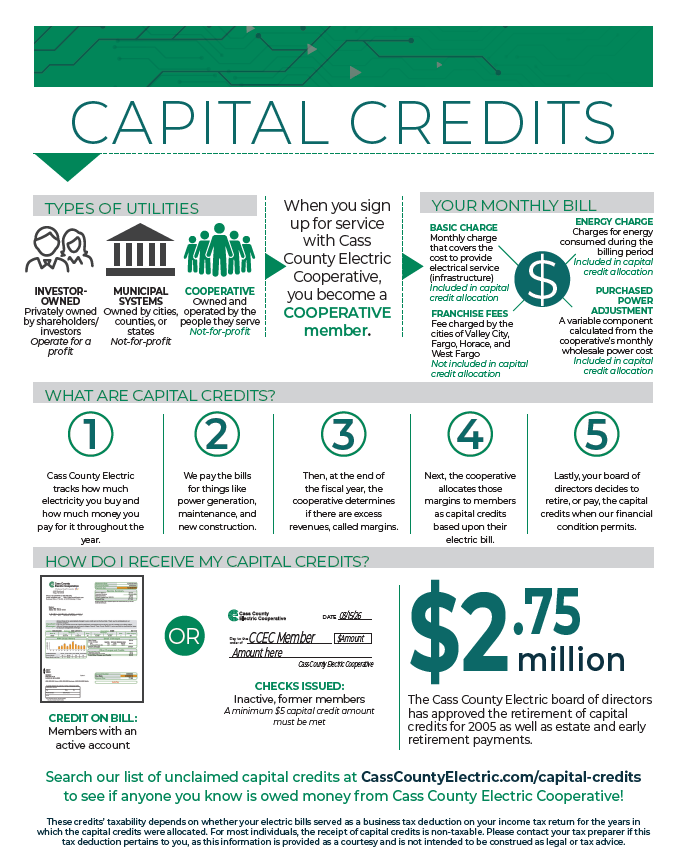
How the capital credit process works:
- Cass County Electric tracks how much electricity each member uses and the revenue paid throughout the year.
- At year’s end, the cooperative completes its financial review to determine whether excess revenues, called margins, were earned.
- Margins are allocated to members as capital credits based on their level of electric use.
- When financial conditions permit, the board of directors approves the retirement of capital credits from prior years.
- Members are notified of capital credit retirements through their billing statement.