Our Office: 4100 32nd Ave. S. Fargo, ND 58104

Protecting What Matters: CCEC’s Wildfire Mitigation Plan
Wildfires aren’t just a concern out west. They’re becoming a growing topic across the utility industry. And while Cass County Electric Cooperative’s service area isn’t heavily forested, we still take the risk seriously. That’s why CCEC has developed a formal Wildfire Mitigation Plan, a proactive approach to help protect our members, infrastructure, and communities.
The plan was prompted by evolving insurance industry guidelines, as well as a change to North Dakota state law, but much of it outlines what CCEC has already been doing for years: managing vegetation, inspecting equipment, and monitoring weather conditions. What’s new is how we’re using technology and mapping tools to guide those efforts more precisely.
An internal mapping system helps us overlay drought conditions, vegetation growth, and wildfire risk across our service area. This tool gives our team a real-time view of potential hotspots and helps prioritize where to trim trees, upgrade equipment, or even consider undergrounding lines.
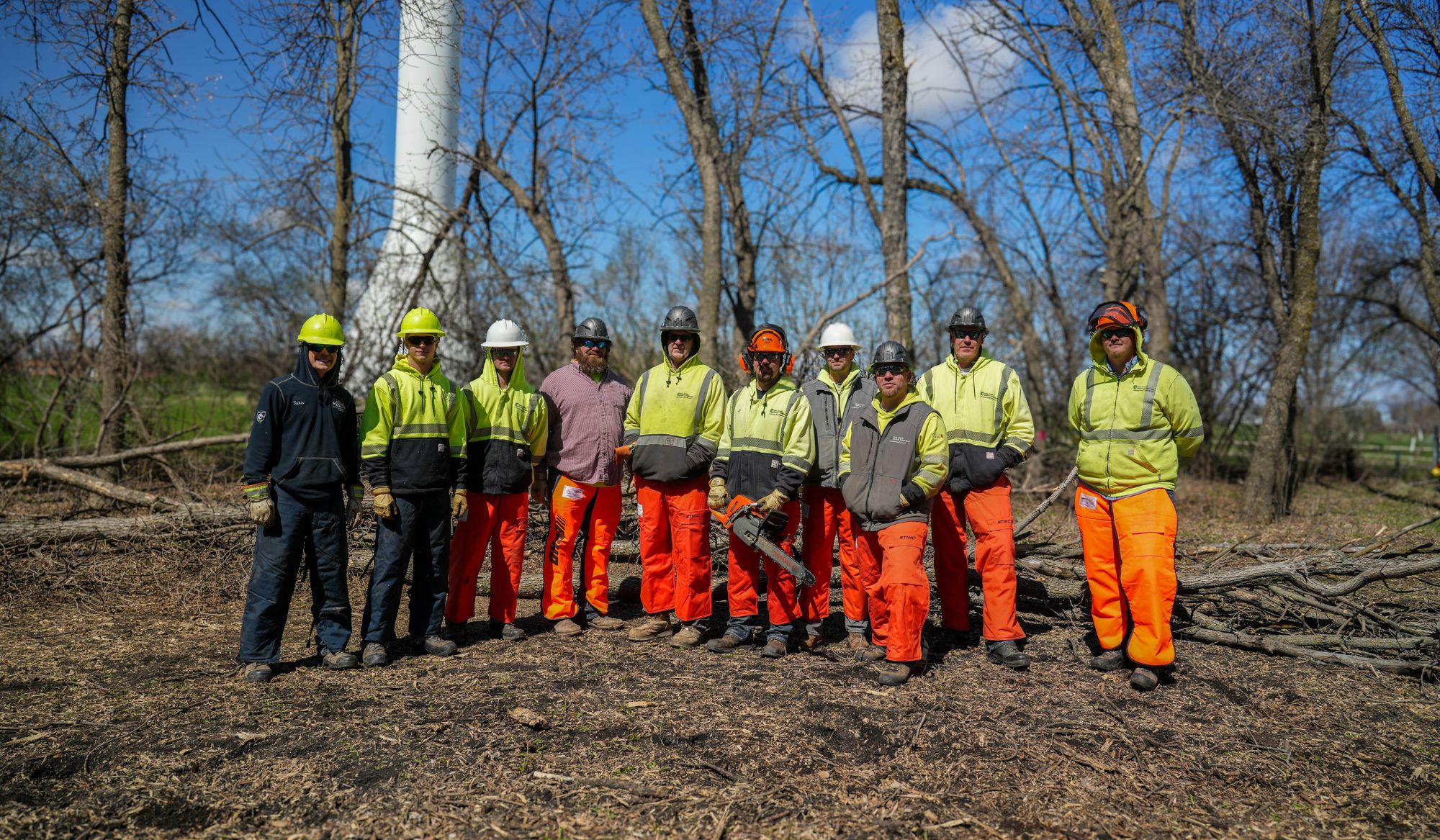
Vegetation management is a key part of that work, and it starts with properly trained crews. CCEC lineworkers recently completed chainsaw safety training, sharpening skills that are essential for trimming trees near power lines. Whether clearing overgrowth in higher-risk areas or responding after a storm, safe chainsaw use helps protect our crews and the communities they serve.
CCEC has also made design changes, like installing bird-safe equipment, moving away from older expulsion fuses, and replacing oil-filled devices with safer alternatives in higher-risk zones. And in the event of a fire, the plan outlines a clear response strategy that prioritizes critical infrastructure, such as hospitals and water systems.
It’s worth noting that some fire safety measures, like more sensitive breaker settings, can lead to longer outages during high-risk periods. This is a tradeoff between safety and reliability, but one CCEC takes seriously.
“We may not be able to prevent every fire,” said Troy Knutson, vice president of engineering and operations, “but we’re doing everything we can to reduce the risk.”
The Wildfire Mitigation Plan is reviewed annually, refined as technology advances, and shaped by input from fire departments and statewide partners. Safe tree trimming, system monitoring, and proactive planning are all part of the same goal: protecting what matters most.